Why Bing May Be the Secret to Your Hotel Appearing on ChatGPT
When a traveller asks ChatGPT "best family-friendly hotel in the Dolomites with a pool and half-board", your hotel is either in the shortlist or it doesn't exist. There's no page two.
According to Hotelworld AI's recent index, only around 1 in 6 hotels are currently visible in AI search. That means the vast majority of properties are invisible to a growing channel, and most don't even know it.
Nobody has a complete playbook for GEO (Generative Engine Optimisation) yet, but a practical consensus is forming. Here are five things you can do today.
1. Do the two-minute reality check
Open ChatGPT, Perplexity, or your favourite AI tool and ask for a hotel recommendation in your destination and segment. Try prompts like:
- "Best boutique hotel in [your city] for couples"
- "Family-friendly hotel in [your region] with a pool"
- "Where should I stay in [your destination] for a luxury weekend"
If you don't appear, that's your baseline. Just remember that AI answers vary by prompt, timing, and model, so check a few variations before drawing conclusions.
2. Make sure Bing can find you
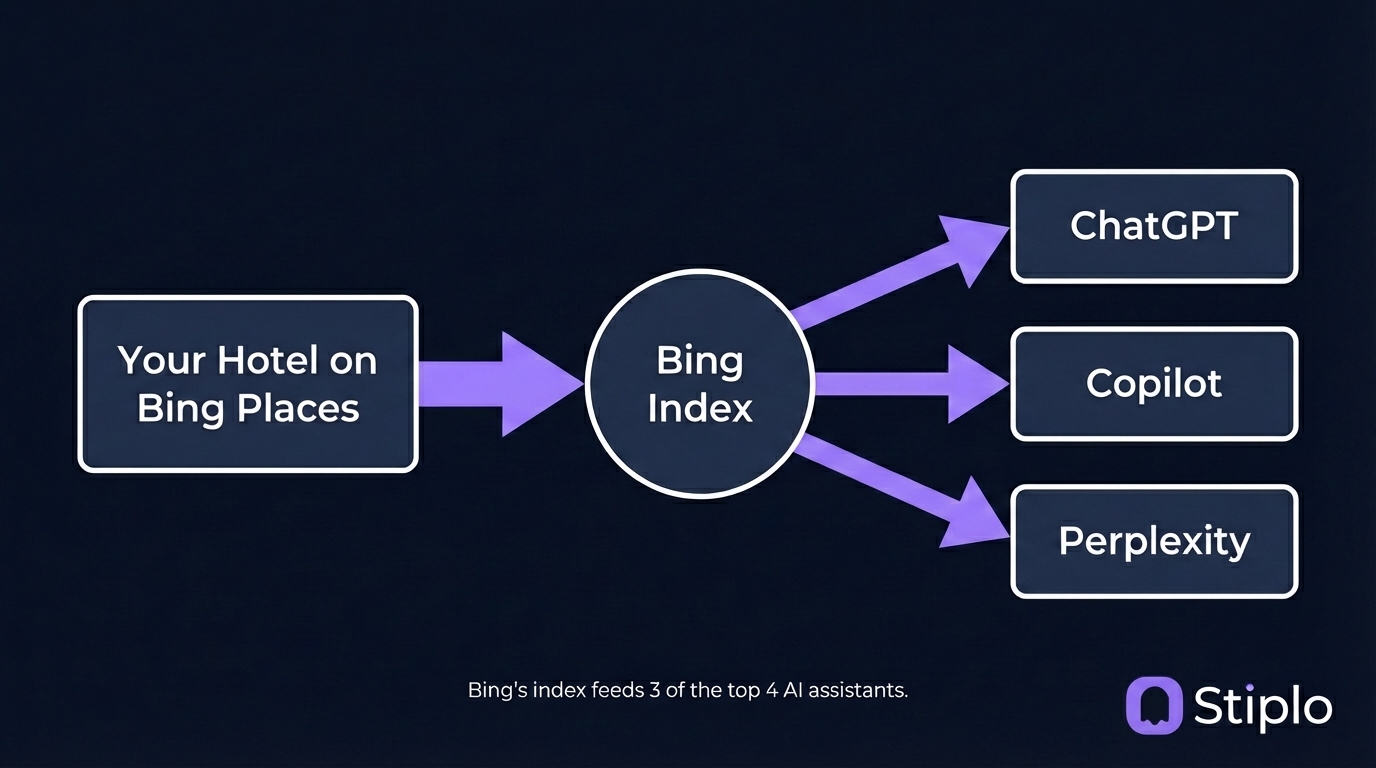
This is the one nobody's thinking about. Bing has been negligible for organic hospitality traffic for years, so most hotel marketing teams ignore it entirely. But here's what changed:
- ChatGPT uses Bing (alongside other sources) for its search features
- Perplexity pulls from Bing and Google
- Microsoft Copilot runs entirely on Bing
If your property isn't properly indexed on Bing, your AI visibility is penalised before you even start.
What to do: Go to Bing Webmaster Tools, submit your sitemap, and check your indexation status. It takes 15 minutes and might be the highest-ROI task your team does this quarter.
3. Audit your robots.txt for AI crawlers
Some hotels are unknowingly blocking the very AI systems they want to appear in. Your robots.txt file controls which bots can crawl your site, and many default configurations block AI crawlers.
What to check: Open yourdomain.com/robots.txt in your browser. It's plain text, no technical skills needed. Look for Disallow rules targeting these crawlers:
- OAI-SearchBot: ChatGPT's search crawler
- ClaudeBot: Anthropic's crawler
- PerplexityBot: Perplexity's crawler
- Applebot-Extended: Apple Intelligence
- GoogleOther: Google's AI training crawler
If you're blocking them, AI systems can't crawl your site and you won't appear in their recommendations.
4. Make sure AI can actually read your website
If your structured data, amenities, room types, or offers are heavily dependent on JavaScript rendering, some AI systems may not interpret them reliably. Many hotel websites load critical content dynamically, which means crawlers see an empty page.
What to prioritise:
- Put room types, rates, and amenities in raw HTML wherever possible
- Ensure your schema.org structured data (Hotel, LodgingBusiness) is in the page source, not injected by JavaScript
- Check that your booking engine content isn't hidden behind iframes or heavy client-side rendering
5. Keep building your citation surface
The hotels that show up consistently in AI recommendations tend to have strong signals beyond their own website. AI models build confidence from multiple independent sources confirming the same information.
What counts as a citation:
- Guest reviews on Google, TripAdvisor, and Booking.com
- Accurate Google Business Profile and Bing Places listings
- Press mentions and editorial features
- Directory listings (tourism boards, destination sites)
- Social media presence with consistent naming and descriptions
The more places that describe your hotel consistently, the more likely AI systems are to recommend it with confidence.
Why this matters now
AI visibility compounds. Hotels that appear in recommendations generate more bookings, more reviews, and more third-party citations, which makes AI recommend them even more.
It's a flywheel, and it's already spinning. The gap between hotels that are visible to AI and those that aren't will only widen from here.
None of these five steps require a budget or a technical team. They require 30 minutes and the awareness that the discovery landscape has permanently changed.
Want to see how your hotel website performs?
A Snapshot checks 30 pages for commercial integrity issues in minutes.
Get a free Snapshot